
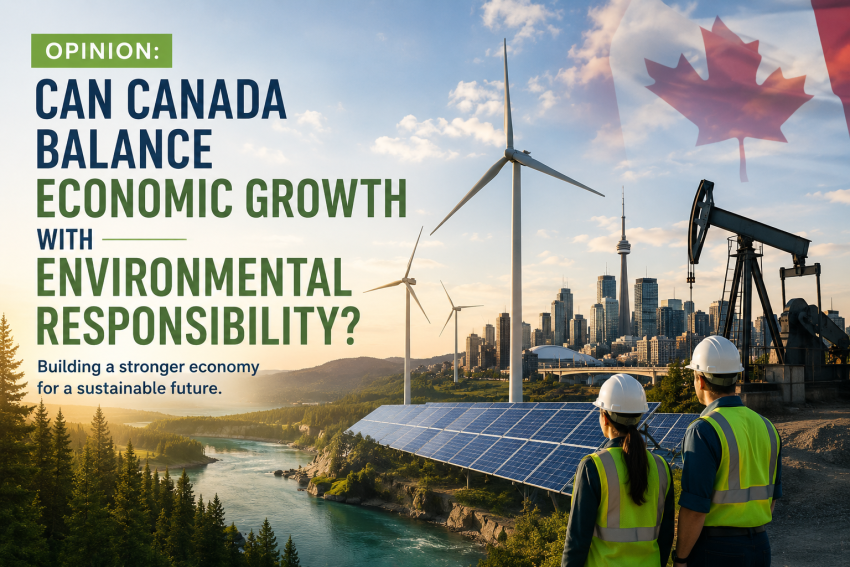
Canada faces a difficult question as it plans for the next decade: can the country continue growing its economy while also meeting ambitious environmental goals?
The answer should not be framed as a simple choice between jobs and the environment. Canada needs both. Economic growth supports employment, public services, investment, and living standards, while responsible environmental policy protects communities, natural resources, and the country’s long-term economic resilience.
The real challenge is managing the transition in a way that is practical, affordable, and fair.
Canada Has More at Stake Than Most Countries
Canada’s economy has long benefited from natural resources, including oil and gas, mining, forestry, hydroelectricity, and agriculture. These industries provide jobs, generate government revenue, support exports, and sustain communities across the country.
At the same time, Canada is increasingly investing in cleaner technologies such as:
- Renewable electricity
- Electric vehicles
- Battery manufacturing
- Carbon capture
- Energy-efficient buildings
- Clean hydrogen
- Critical minerals
This creates an unusual situation. Canada is both a major producer of traditional energy and a country with significant potential to become a leader in the low-carbon economy.
Economic Growth Cannot Simply Be Put on Hold
Calls for faster climate action sometimes overlook the economic realities facing Canadian families and businesses.
The country continues to deal with:
- Housing affordability
- High living costs
- Infrastructure shortages
- Productivity concerns
- Trade uncertainty
- Regional economic differences
Reducing economic activity too aggressively could make many of these problems worse.
Canada needs investment, jobs, exports, and stronger productivity. Environmental policies therefore have to support economic modernization rather than simply making existing industries more expensive.
But Ignoring Environmental Risks Is Also Costly
The opposite approach—prioritizing growth without considering environmental consequences—carries serious economic risks of its own.
Wildfires, floods, droughts, extreme heat, and other climate-related events can damage homes, businesses, infrastructure, and agricultural production.
Environmental responsibility should therefore be viewed not only as a climate issue but also as an economic one.
Investing in resilient infrastructure, cleaner energy, modern electricity grids, and more efficient buildings can reduce long-term costs while helping communities prepare for changing conditions.
Clean Energy Can Become an Economic Opportunity
One of Canada’s greatest advantages is its access to relatively clean electricity in many provinces.
Hydroelectric power, nuclear energy, wind, solar, and other sources could support the growth of industries that increasingly value low-carbon production.
That creates opportunities in areas such as:
- Electric vehicle manufacturing
- Battery production
- Critical mineral development
- Clean technology
- Advanced manufacturing
- Renewable energy construction
Rather than seeing environmental policy only as a cost, Canada can use the transition to attract investment and build industries that may become increasingly important globally.
Traditional Energy Still Has a Role
A realistic transition also recognizes that oil and natural gas will not disappear overnight.
Canada’s energy industry remains economically important, particularly in Western provinces. Thousands of families and communities depend directly or indirectly on the sector.
The goal should therefore be to reduce emissions while maintaining competitiveness during the transition.
That could involve:
- Cleaner production methods
- Methane reduction
- Carbon capture technologies
- Improved energy efficiency
- Continued technological innovation
A transition that ignores workers and resource-dependent communities is unlikely to maintain public support.
Workers Must Be Part of the Transition
Perhaps the most important part of Canada’s environmental strategy is ensuring that workers benefit from economic change.
Electricians, engineers, construction workers, equipment operators, technicians, and skilled tradespeople will all be required to build the infrastructure needed for a cleaner economy.
Governments and businesses should invest heavily in:
- Apprenticeships
- Retraining programs
- Skilled trades education
- Engineering and technology programs
- Regional workforce development
Environmental policy becomes much easier to support when people can see clear employment opportunities attached to it.
Businesses Need Predictable Policies
Another major challenge is uncertainty.
Businesses making investments that may last 20 or 30 years need to understand the rules they will be operating under.
Constantly changing environmental regulations, tax policies, incentives, and approval processes can discourage investment.
Canada needs a stable long-term framework that gives companies confidence while still maintaining clear environmental standards.
Predictability can encourage businesses to invest in cleaner technologies rather than delaying major projects.
Canada’s Provinces Will Take Different Paths
There is unlikely to be a single transition strategy that works equally well everywhere.
Provincial economies differ dramatically.
Alberta and Saskatchewan have significant oil and gas industries. Quebec and Manitoba benefit from abundant hydroelectricity. Ontario has major manufacturing and nuclear power sectors. Atlantic Canada has opportunities in wind and other renewable resources.
Effective environmental policy needs to recognize those differences rather than imposing an identical economic model across the country.
Indigenous Partnerships Should Be Central
Major energy, mining, infrastructure, and resource projects increasingly involve Indigenous communities.
Meaningful partnerships can create opportunities through:
- Ownership stakes
- Employment
- Revenue sharing
- Training
- Business development
Responsible development requires consultation and respect for Indigenous rights, but it can also create significant long-term economic opportunities when communities are genuine partners in projects.
Consumers Cannot Carry the Entire Cost
Climate policy ultimately needs public support.
If Canadians experience environmental measures primarily through higher household expenses, support can quickly weaken—particularly when families are already struggling with food, housing, and transportation costs.
Governments therefore need to consider affordability when designing environmental policies.
Programs that help households purchase efficient appliances, improve home insulation, adopt cleaner transportation, or reduce energy consumption can make the transition more practical.
The Better Question Is How Canada Should Grow
The debate should move beyond asking whether Canada must choose between economic growth and environmental responsibility.
A more useful question is:
What kind of economic growth should Canada pursue?
Growth based on higher productivity, modern infrastructure, innovation, cleaner technology, skilled workers, and competitive industries can strengthen the economy while reducing environmental impacts.
That will require compromises. Some projects will move forward despite environmental concerns, while others may face stricter requirements or be rejected altogether.
Good policy is rarely about achieving one objective at the expense of everything else.
Final Thoughts
Canada can balance economic growth with environmental responsibility, but only if policymakers resist treating the two goals as opposites.
The country should continue developing its natural resources while investing aggressively in clean technology, renewable energy, infrastructure, skilled workers, and emissions reduction. It should also ensure that environmental policies remain affordable for households and competitive for businesses.
The transition to a greener economy will take decades, not years. Canada’s success will depend on whether it can make that transition without leaving workers, communities, or industries behind.
Economic prosperity and environmental responsibility do not have to compete. Done well, each can help strengthen the other.