
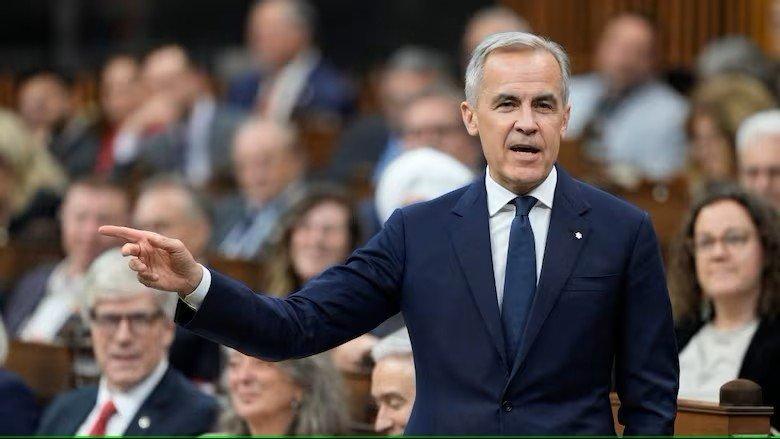
When Mark Carney became Canada’s 24th Prime Minister in March 2025, expectations were exceptionally high. A former Governor of both the Bank of Canada and the Bank of England, Carney entered office with a reputation as a steady economic leader rather than a career politician.
His first 100 days were defined by rapid policy changes, a renewed focus on economic growth, and efforts to strengthen Canada’s position amid rising global uncertainty. While supporters praised his decisive leadership, critics questioned several reforms and their long-term impact.
Here’s a look at the biggest developments during Carney’s first 100 days in office.
1. Ending the Consumer Carbon Tax


One of Carney’s first executive actions was eliminating Canada’s federal consumer carbon tax.
The decision fulfilled a major campaign commitment aimed at reducing costs for households while maintaining Canada’s broader climate goals through alternative policies. Canadians still received the final carbon rebate before the tax officially ended.
Supporters argued the move helped lower fuel and heating costs, while critics questioned whether Canada could still meet its emissions targets without consumer carbon pricing.
2. Launching the One Canadian Economy Act
Perhaps the biggest legislative achievement during Carney’s early months was the introduction and passage of the One Canadian Economy Act.
The legislation aims to:
- Reduce barriers to interprovincial trade
- Accelerate nationally significant infrastructure projects
- Improve the movement of goods and labour across provinces
- Increase Canada’s economic competitiveness
The government described the bill as an important step toward creating a stronger domestic economy amid growing international trade tensions.
3. Responding to Growing U.S. Trade Pressure
Relations with the United States became one of the defining challenges of Carney’s early leadership.
As the U.S. announced new tariffs on several Canadian products, Carney pledged to defend Canadian industries while continuing negotiations under the Canada–United States–Mexico Agreement (CUSMA).
His government emphasized:
- Protecting Canadian manufacturing
- Supporting exporters
- Diversifying international trade
- Reducing dependence on any single market
This trade-focused approach became a central pillar of the administration’s economic strategy.
4. Accelerating Housing Construction
Housing affordability remained one of Canada’s biggest concerns.
During his first 100 days, Carney announced the creation of Build Canada Homes, a federal initiative intended to increase housing supply by:
- Building more affordable homes
- Using public land more efficiently
- Supporting Canadian-made construction materials
- Speeding up project approvals
The government hopes these measures will help address Canada’s long-term housing shortage.
5. Shifting Canada’s Economic Priorities
Unlike previous governments, Carney placed heavy emphasis on economic resilience.
His administration focused on:
- Increasing productivity
- Attracting investment
- Modernizing infrastructure
- Encouraging innovation
- Supporting advanced manufacturing
As a former central banker, Carney repeatedly emphasized fiscal responsibility alongside strategic public investment.
6. Strengthening Canada’s International Partnerships


Carney quickly repositioned Canada’s foreign policy.
His government strengthened relationships with:
- European allies
- Indo-Pacific partners
- NATO members
- International financial institutions
At the 2026 World Economic Forum in Davos, Carney argued that the global economic order was changing and that middle powers like Canada should build stronger partnerships beyond traditional alliances.
7. A More Business-Oriented Government
Many observers noted that Carney’s governing style differed from previous administrations.
His early priorities emphasized:
- Economic growth
- Investment certainty
- Regulatory efficiency
- Infrastructure development
- Trade competitiveness
Business groups generally welcomed the government’s focus on productivity, although labour organizations and environmental advocates expressed concerns over some policy changes.
Early Criticism
Not all reactions were positive.
Opposition parties and advocacy groups criticized the government over issues including:
- Climate policy following the removal of the carbon tax
- Faster approval timelines for major infrastructure projects
- Indigenous consultation on certain legislation
- Balancing economic development with environmental protection
Some analysts also questioned whether the government’s ambitious agenda could be fully implemented within a minority Parliament.
What Canadians Have Seen So Far
Within just 100 days, Canadians had already witnessed several significant changes:
- Elimination of the federal consumer carbon tax
- New legislation to reduce internal trade barriers
- Increased focus on economic growth
- Stronger response to international trade disputes
- New housing initiatives
- Expanded infrastructure planning
- More active international diplomacy
Together, these actions signaled a government focused on economic competitiveness and adapting Canada to an increasingly uncertain global economy.
Looking Ahead
The first 100 days rarely define an entire premiership, but they often reveal a government’s priorities.
For Mark Carney, those priorities have been clear:
- Build a stronger domestic economy
- Improve Canada’s global competitiveness
- Address housing affordability
- Respond to changing international trade dynamics
- Modernize government decision-making
Whether these early reforms produce lasting economic benefits will depend on how successfully the government navigates future trade negotiations, housing challenges, and fiscal pressures.
Final Thoughts
Mark Carney’s first 100 days as Prime Minister marked a significant shift in Canada’s political and economic direction. With a focus on growth, infrastructure, housing, and trade, his administration moved quickly to implement key campaign promises while responding to a rapidly evolving global landscape.
Although debates continue over the pace and direction of these reforms, one thing is clear: Carney’s government has wasted little time setting its agenda. As Canada faces ongoing economic uncertainty and geopolitical challenges, the coming months will determine whether these early initiatives deliver the long-term results many Canadians are hoping for.